


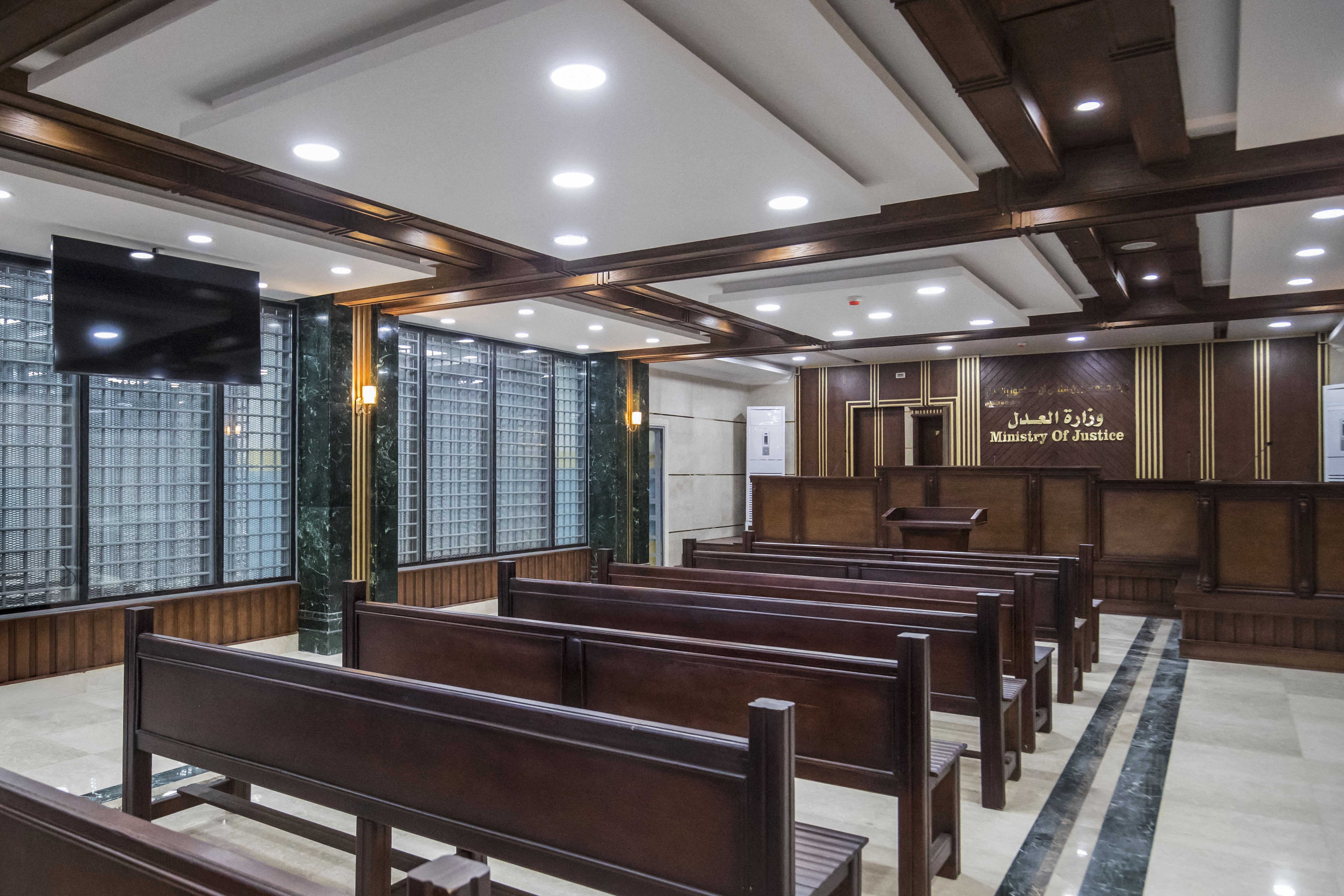
Trials Without Safeguards: Systematic Patterns of Fair Trial Violations before Terrorism Criminal Circuit (September 2024 – January 2026)
The Egyptian Front for Human Rights, the Egyptian Commission for Rights and Freedoms, and the Sinai Foundation for Human Rights condemn the unfair trials faced by defendants over the past year, particularly before the Badr Criminal Court circuits, known as the “terrorism circuit courts (TCC)”, which lack the fundamental guarantees of a fair trial as stipulated under international human rights law, foremost among them the International Covenant on Civil and Political Rights (ICCPR), as well as the guarantees enshrined in the Egyptian Constitution. The three organizations express grave concern over the continued disregard by the Egyptian authorities for the basic pillars of fair trial standards, a practice that threatens both defendants and legal professionals, and undermines the foundations of justice, the rule of law, and due process in Egypt.
The Egyptian authorities continue to pursue policies that violate essential fair trial guarantees in cases before certain criminal courts involving political charges. This has been documented by lawyers and trial monitors over the past year, spanning from September 2024 to December 2025. These violations place defendants’ lives at serious risk and endanger the lawyers assigned to defend them.
Although the monitoring efforts covered only the past year, some of these cases date back to 2017 and 2018 and have yet to receive final judgments. The monitoring relied on documentation and recorded testimonies from more than 59 cases, the vast majority of which were heard before the Badr Criminal Courts, with the exception of one case before the Ismailia Criminal Court. Judgments have been issued in only three of these cases.
This paper aims to document and analyze systematic patterns of serious violations of fair trial guarantees in cases before the Badr Criminal Courts, based on direct observation of trial sessions, testimonies from lawyers, and a review of referral orders and court records. It covers the period from September 2024 to December 2025 and includes at least 59 cases. The paper does not seek to catalogue every violation, but rather to highlight recurring patterns that indicate structural deficiencies in judicial proceedings, rather than isolated incidents.
Defendants in these cases face a range of recurring political charges, including: joining a terrorist group, such as the Muslim Brotherhood or ISIS, and financing it; spreading false news; inciting the dissemination of extremist ideas on social media; inciting terrorist acts; planning terrorist operations (including alleged targeting of public facilities); misuse of social media; harming the national economy; and possession of explosives.
The monitored cases include 157 defendants over the age of sixty, 106 female defendants, most of whom are already in detention, and one minor defendant. The cases also include charges against 14 lawyers, most of whom are defendants in Case No. 2976/ 2021.
This paper monitoring relied on documented incidents and firsthand testimonies from trial sessions throughout the year, compared against internationally recognized fair trial standards, including Egypt’s obligations under the ICCPR and the UN Basic Principles and Guidelines on Fair Trial and the Independence of Judges and Prosecutors, which are also reflected in the Egyptian Constitution and domestic laws.
Lawyers and trial monitors documented numerous clear violations of fair trial standards, involving coordinated and collective responsibility among judicial panels, security authorities, and the Public Prosecution.
Violation of the Right to Presence and Public Hearings
The right to be present and the principle of public hearings have been subject to widespread and systematic violations, carried out with the complicity of judicial panels and security authorities responsible for transporting defendants and securing courtrooms. These violations have affected defendants, their families, and the general public. Throughout the year, arbitrary practices were documented, including the absence of defendants from court sessions without legal justification by keeping them inside detention cells. This constitutes a clear violation of the defendant’s right to attend their trial as guaranteed under Article 237 of the Criminal Procedure Code and undermines Article 96 of the Egyptian Constitution.
Despite the clarity of this violation, court panels proceeded with hearings in the defendants’ absence without questioning security authorities regarding the reasons for their non-attendance, resulting in a serious breach of due process and fair trial guarantees before a competent, independent, and impartial court. Defense teams repeatedly objected to the defendants’ absence and requested that it be recorded in the official minutes; however, the court ignored these requests without providing legal justification for holding hearings in the defendants’ absence.
The right to presence is not limited to mere physical attendance but extends to the effectiveness and quality of participation to ensure the right to defense. A systematic circumvention of this right was observed, whereby defendants were brought to court but kept inside prison transport vehicles outside the courtroom for prolonged periods, sometimes six to seven hours, without water, food, ventilation, or medical care. Hearings would then commence after the defendants had been physically and psychologically exhausted, directly affecting their ability to concentrate and engage with the proceedings.
Some defendants were allowed to attend hearings only while confined inside sound- and heat-insulated glass cages that prevented them from hearing the proceedings or effectively communicating with their lawyers. Defense teams and defendants repeatedly objected to this practice, yet the court failed to respond, thereby undermining the right to defense and violating the principle of equality of arms.
Regarding the public nature of hearings, legally unjustified restrictions were imposed, including preventing family members from attending, excluding members of defense teams from entering courtrooms, and confiscating lawyers’ mobile phones while prohibiting their use, even for professional purposes. These measures constitute a clear violation of the principle of public hearings as stipulated in Article 268 of the Criminal Procedure Code, effectively transforming the sessions into closed trials lacking public oversight and fundamental guarantees of justice.
The Role of Public Prosecutors
Fair trials require the Public Prosecution to act with integrity and impartiality, refraining from discrimination or bias in favor of or against defendants based on political affiliation, religion, ethnicity, or gender. However, practices observed in cases before the Badr Criminal Courts reveal a systematic failure by the Prosecution to fulfill its role as an authority tasked with seeking the truth and ensuring justice. This undermines the principle of neutrality and equality between parties and raises serious concerns regarding impartiality and integrity.
These concerns are evident in the rapid referral of defendants to trial without meaningful scrutiny of interrogations or investigations conducted by security bodies, during which confessions or statements were allegedly obtained. Bias is further reflected in the repetition of identical charges, often two or three standardized accusations, applied uniformly to all defendants in a case, as reflected in referral orders issued by the Prosecution.
Moreover, the Prosecution often does not supervise investigations from the outset; arrests and targeting of individuals occur first, while the legal characterization of charges is determined at a much later stage. The Prosecution relies almost exclusively on National Security Agency (NSA) investigations to construct its case, without consulting independent or equivalent sources to balance the information. Such biased practices appear to be a logical consequence of the lack of functional independence of the Public Prosecution and its subordination to the executive branch, represented by the Ministry of Justice.
These practices contradict Article 189 of the Egyptian Constitution regarding the independence of the Public Prosecution and violate the UN Guidelines on the Role of Prosecutors, particularly principles relating to impartiality, integrity, the pursuit of justice rather than conviction, respect for human rights and fair trial guarantees, non-discrimination, verification of the legality of evidence, effective oversight of law enforcement authorities, and institutional independence from improper interference.
Systematic Restrictions on Lawyers and Violations of the Right to Defense
Monitoring and testimonies from hearings before the Badr Criminal Courts reveal significant harassment and arbitrary treatment of lawyers while performing their professional duties. These practices violate international and constitutional commitments guaranteeing freedom to practice the legal profession, as well as its independence and protection.
Over the past year, lawyers documented increasing use of “security procedures” as a pretext to obstruct communication with defendants held inside glass cages. When lawyers attempted to communicate with their clients, security personnel intervened to prevent such interaction. In cases where lawyers insisted on recording the defendants’ absence from hearings, the court threatened them if they did not withdraw their requests. One such incident escalated into a confrontation between a lawyer and the presiding judge of the Second Terrorism Circuit, Counselor Wagdy Abdel Monem.
In another case, a lawyer who insisted on documenting his client’s absence, arguing that it rendered the proceedings invalid, was refused by the court. When the defense requested authorization to initiate recusal proceedings against the court for refusing to record their motions, the request was also denied. Consequently, the defense team declared its collective withdrawal.
The court frequently dismisses or refuses to record essential defense motions in the official minutes under the pretext of expediting proceedings or claiming irrelevance, despite their potential to significantly alter the course of the case, what the Court of Cassation has described as requests that, “if substantiated, would change the outcome of the case.” These include requests for detention certificates or certified copies of previous judgments. The court often directs lawyers to submit such requests on unofficial papers for later recording, a delaying tactic that undermines documentation and obstructs effective appeals before higher courts.
Defense requests for the release of defendants who have exceeded legal limits for pretrial detention, as well as elderly, ill, or female detainees, are routinely ignored. Lawyers report being granted no more than three minutes each to present oral arguments before being interrupted and prevented from continuing. The court repeatedly interrupts and disrupts the defense, creating an atmosphere that hinders effective advocacy.
Defendants themselves are prevented from participating meaningfully in their defense due to confinement in soundproof glass cages that obstruct both hearing and visibility. The Second Circuit, presided over by Counselor Wagdy Abdel Monem, refused defense requests to allow defendants to exit the glass cage to hear the reading of referral orders, charges, or witness testimony—particularly testimony against them. Similarly, the First Circuit, presided over by Counselor Mohamed El-Saied El-Sherbiny, allows defendants to exit the cage only during the reading of charges and final pleadings, keeping them confined during other sessions and ignoring requests to document violations.
The court also interferes directly in witness examinations by preventing lawyers from posing certain questions or completing lines of questioning, justifying such interference as necessary to “protect the witness from the defense.”
Other unjustified practices affecting lawyers include security personnel occupying designated rest areas and facilities intended for lawyers, including restrooms, without distinction between those designated for male and female lawyers. Female lawyers are particularly affected, as they are deprived of access to private facilities, undermining their privacy, physical safety, and gender-sensitive considerations, adding to the burdens placed on the defense and contributing to their exhaustion and marginalization.
These practices have escalated to verbal abuse, insults, and threats of detention. Judge Mohamed El-Saied El-Sherbiny reportedly insulted a lawyer by describing him as “provocative” and demanded he immediately conclude his argument, raising serious concerns about judicial neutrality. In another incident before the Second Circuit, a lawyer was detained inside the courtroom while exercising his right to defense because his name appeared in a pending terrorism case. He was later released following intervention by other lawyers, after pledging not to attend Badr Court until the case against him was resolved. This reflects a pattern of flawed trials in which the right to defense is marginalized and judicial professionalism and independence are compromised.
The systematic targeting of lawyers is further evidenced by the fact that 14 lawyers themselves are defendants in the monitored cases, facing charges such as joining, leading, or financing a terrorist group, likely as a result of their defense work in political cases. Among them are human rights lawyer Osama Bayoumi and lawyer Ibrahim Metwally.
These practices violate constitutional guarantees of the right to defense, particularly Article 54, which guarantees the right to counsel, and Article 98, which affirms that the right to defense, personally or by representation, is guaranteed and that the legal profession is independent and protected as a cornerstone of justice. They also contravene the UN Basic Principles on the Role of Lawyers, which affirm lawyers’ right to perform their professional functions freely and without intimidation, interference, or harassment; to communicate confidentially and effectively with clients; and to be protected from threats, prosecution, or arbitrary sanctions arising from the discharge of their professional duties.
Impartiality, Independence, and Jurisdiction of the Court
According to testimonies from lawyers and defendants’ family members, some of whom have taken on defense roles themselves, the trials in question lack the required standards of impartiality and independence, as reflected in the experiences of both counsel and their clients. Notably, the composition of the First and Second Circuits responsible for these politically sensitive cases has remained largely unchanged for nearly seven years, with only minor adjustments that did not affect the presiding judges. This stability raises legitimate questions, particularly given that the Egyptian judicial system typically rotates judicial assignments annually under its established case-distribution policy.
Observation of the performance of these two circuits over recent years reveals a consistent pattern of renewing defendants’ pretrial detention for prolonged periods, often in violation of the law. Beyond the issue of judges, trials before the Badr Criminal Courts are held in facilities administratively affiliated with the police rather than the Ministry of Justice, despite claims that they fall under the authority of the Cairo Court of Appeal. Several lawyers have reported a lack of professionalism and a clear bias by both circuits against defendants from the outset, including overt judicial interference in proceedings to steer witness testimony.
Repeated incidents have been documented in which judges intervened during witness examinations. When witnesses claimed not to recall certain facts or information underlying the charges, and gaps or inconsistencies became apparent, judges reportedly intervened to direct them toward specific information or to “correct” their testimony, as reflected in transcripts and investigative records.
Some judges have openly expressed deference toward prosecution witnesses, particularly police and security officers who serve as primary witnesses against defendants. Excessive reverence shown by Counselor Wagdy Abdel Monem toward officer-witnesses was documented in one case, where he blocked defense efforts to question them. If a defense question appeared to deviate from the anticipated trajectory of the case, the judge intervened to reject the question, terminate the examination, record the court’s objection in the minutes, and adjourn the session.
Preferential treatment extends to the Public Prosecution. Both circuits violate the principle of equality of arms by permitting the Prosecution to photograph and document its pleadings, while entirely prohibiting the defense from doing so. The Prosecution is allowed to elaborate extensively, submit and record its motions, and confirm compliance with court requests. In contrast, the defense is denied the opportunity to fully present or record its motions and is barred from personally documenting session proceedings.
The Second Circuit has maintained a policy of conducting hearings without the presence of defendants. When the defense insists that sessions should not proceed in the defendant’s absence, or attempts to formally record such absence, the court has responded by postponing proceedings for extended periods, sometimes up to three months, as occurred in Cases 570, 330, and 1070. In other instances, Counselor Wagdy Abdel Monem reportedly conducted hearings in the absence of both defendants and defense counsel while allowing prosecution witnesses, particularly the arresting officer, to testify. Monitoring further indicates a pattern of pre-determined judgments and collective convictions, with acquittals being rare: only one acquittal among nine cases decided thus far.
The Right to Humane Treatment Free from Torture and Cruel, Inhuman, or Degrading Treatment
While the obligation to ensure humane treatment applies from the moment of arrest and throughout detention, documented practices during last year’s trials show that this right was violated even inside courtrooms and in the presence of judicial panels. In Case No. 618 of 2022, for example, some defendants were reportedly subjected to enforced disappearance at a National Security facility during the initial stage of arrest and were tortured for eight days.
Cruel and degrading treatment also manifests in the deliberate exhaustion of defendants through prolonged transport from detention facilities to the courthouse. These journeys, lasting six to seven hours, leave defendants without food or water and disproportionately affect elderly and ill detainees, impairing their ability to meaningfully participate in proceedings.
Courtrooms themselves lack adequate capacity to accommodate the large number of defendants, particularly within the aforementioned glass cages, which suffer from poor ventilation, insufficient lighting, and extreme heat. These conditions cause breathing difficulties and pose serious health risks, especially for elderly and medically vulnerable detainees. In one incident, a lawyer informed the court of the suffocating conditions inside the cage after being asked to calm distressed defendants; the court took no action in response.
Deliberate inhuman treatment further includes documented physical assaults by security personnel. The head of security at Badr Court, Officer Walid Assal, allegedly assaulted defendants Jihad El-Haddad, Ahmed Abu Baraka, Anas El-Beltagy, and Hassan El-Shater inside the court’s holding area after they demanded to attend their hearing. When defendants requested that the assault be officially recorded, the court reportedly led them to believe it would be documented, only for them to later discover that it had not been included in the record. Neither the court nor the Prosecution took legal action regarding the reported dragging, beating, insults, and abuse.
Inhuman treatment also affects detainees with serious health conditions whose requests for medical care are ignored. Among such cases is human rights lawyer Hoda Abdel Monem, who has spent seven years in detention and suffers from chronic illnesses including diabetes, blood clots, and two heart attacks in August 2025; detainee Marwa Arafa, who suffered a pulmonary embolism and was initially denied appropriate medical care; and Human Rights lawyer Ibrahim Metwally, who requires urgent prostate surgery, which prison authorities have refused to provide. The court has not intervened to ensure their legal right to treatment or release on medical grounds.
Trial Without Undue Delay
The right to be tried without undue delay has been gravely violated. Many defendants have exceeded the legal two-year maximum for pretrial detention without release. Notably, defendants in Case No. 955 of 2017 have spent over eight years in pretrial detention without a final judgment, despite the conclusion of pleadings nearly a year ago. Counselor El-Sherbiny has repeatedly postponed issuing a verdict, attributing delays to the defense’s procedural requests.
Authorities have also adopted a practice of circumventing the legal maximum for pretrial detention by referring cases to trial and then allowing lengthy intervals between referral and actual hearings. Hearings are frequently adjourned for extended periods, sometimes up to three months between sessions, contrary to constitutional and human rights principles requiring expeditious adjudication.
Accessibility of Courts
Instead of facilitating access to justice for defendants, defense counsel, and families, authorities have institutionalized the practice of holding trials inside prison-affiliated “Reform and Rehabilitation Centers,” located in remote areas without accessible public transportation. Defense lawyers and family members must undertake journeys lasting four to five hours each way, exhausting them before proceedings even begin.
Expansion of Charges before Terrorism Circuits
One of the most significant violations of fair trial principles is the expansion of crimes and charges referred to the terrorism circuits of the TCC. Originally established to handle cases involving political violence or attacks on institutions, these circuits now receive a broad array of cases, including those lacking evidence of violent acts.
Under the pretext of reducing pretrial detention, the Prosecution has increasingly referred cases, often based solely on National Security investigations, where defendants are accused of “joining terrorist groups” without evidence of violent conduct or promotion of extremist content. Many defendants have been referred to trial after exceeding two, three, or even four years of pretrial detention.
Following notification of referral orders, detention reviews are effectively frozen for periods ranging from three to eight months without judicial oversight. Authorities have exploited a loophole in the Criminal Procedure Code (prior to amendment), which did not require the Prosecution to forward cases within a specific timeframe after referral notification.
“Rotation” of Cases
Authorities have also employed the practice known as “Rotation,” whereby defendants are repeatedly charged in new cases to prolong detention. This practice increases the burden on defense counsel, creates uncertainty regarding defendants’ attendance at hearings, and undermines the substance of the right to a fair trial.
Recommendations
In light of these documented violations, the three human rights organizations call on Egyptian authorities to:
-
Immediately and unconditionally release any individual detained or prosecuted solely for exercising fundamental rights, including freedom of expression and peaceful assembly.
-
Release all detainees who have exceeded the legal limits of pretrial detention.
-
Guarantee that lawyers can perform their professional duties freely and independently without intimidation or interference.
-
Adhere to established judicial regulations, including the annual reconstitution and rotation of judicial circuits, including terrorism circuits.
-
Ensure that judicial bodies operate in an environment of independence, impartiality, and integrity, safeguarding defendants’ rights and preserving the independence and credibility of the Egyptian judiciary.
Tags
Recent Posts

Most viewed

Related Postes
 English contentEnglish content