


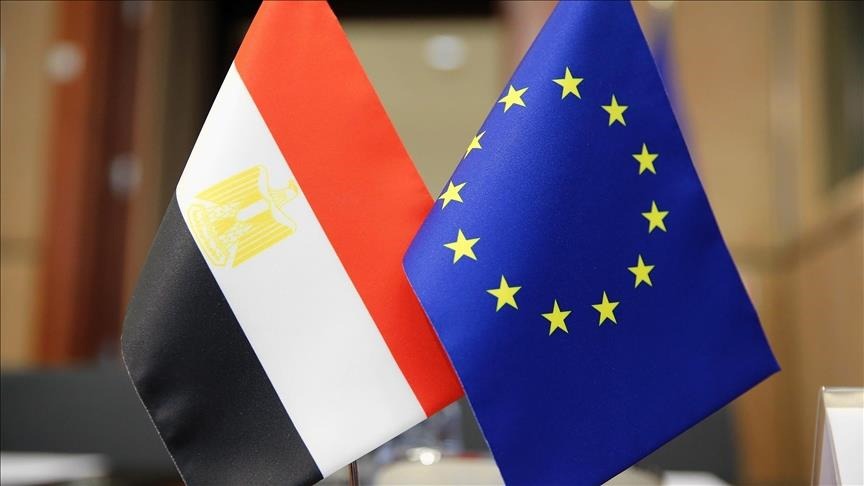
Egyptians Deserve Human Rights, Not a Fragile Status Quo Supported by the EU
Two years after the launch of the EU-Egypt Strategic and Comprehensive Partnership, there has been no meaningful progress on human rights, democracy, or the rule of law in Egypt, despite the fact that progress on these issues was presented as a key condition for the EU’s €5 billion macro-financial assistance (MFA) package. Repression continues to deepen, undermining the European Union’s stated pursuit of stability in Egypt, said the signatory organizations ahead of the EU-Egypt Association Council meeting expected on 15 June 2026.
The continued closure of public space, mass arbitrary arrests and detention, and exclusion of independent political and social actors threaten the country’s medium-term stability. Governance through fear, emergency-style measures, and the systematic suppression of peaceful dissent may impose short-term quiet, but it deepens public grievances, weakens institutions, fuels social fragmentation, and erodes the rule of law needed for sustainable governance. State-led interventions across key economic sectors are characterized by opacity and the sidelining of civilian authorities and workers’ representatives, undermining the socioeconomic rights of workers, their families, and marginalized communities. Repeated executive interference in the electoral process further damages the credibility of state institutions. These dynamics are especially dangerous amid severe economic pressures, regional instability, and growing vulnerabilities among refugees and marginalized communities. By treating repression as compatible with stability, the EU risks reinforcing a brittle status quo that may appear orderly on the surface while becoming more volatile and less resilient over time.
The EU and its Member States should use the EU-Egypt Association Council meeting to press Egypt to undertake genuine reforms and ensure that these concerns are clearly reflected in the European Commission’s upcoming first annual report on EU MFA to Egypt.
In recent years, the Egyptian authorities have portrayed the human rights situation as improving, pointing to measures such as the adoption of the national “human rights strategy”, the role of the parastatal National Council for Human Rights, the enactment of new legislation (that has no tangible positive impact so far and actually poses grave threats to human rights or the rule of law), and limited presidential pardons of prisoners. These largely symbolic steps have been repeatedly presented as evidence of reform. While the EU’s public statements have frequently appeared to endorse this narrative, no tangible progress on the rule of law or human rights has appeared in Egypt.
The use of enforced disappearance and torture, sometimes leading to death, remain systematic and widespread; the impunity of the security bodies for such crimes remains near-total. The punitive use of mass arbitrary detention in abysmal conditions is unchanged, as is the crackdown on media freedoms; Egypt held 18 journalists behind bars in 2025, maintaining its years-long record as one of the world's worst jailers of journalists, and its retaliatory arrests of journalists and their family members. Repression of the freedom of association, peaceful protest and dissent - often through the misuse of counterterrorism legislation - is ongoing. So is the repression of human rights defenders, peaceful opposition figures, scholars, independent trade unions, LGBTQI+ people and religious minorities. Even minors have been targeted for their online gaming activities. Gender-based violence, gender inequality and discrimination remain pervasive.
There has been no move to investigate the mass graves in Sinai highlighted by civil society reports in 2025. Egyptian authorities persist in disregarding the rule of law, as exemplified by widespread denial of due process and unfair trials, as well as practices of case rotation and double jeopardy, all in violation of Egypt’s constitutional rights guarantees and international human rights commitments. Egypt adopted a draconian new Code of Criminal Procedures, decried by UN experts and independent civil society; after international pressure and a presidential referral of the text back to Parliament, the latter failed to tackle the most problematic elements, and merely postponed its implementation by a year, after which the President issued it.
If anything, Egypt’s human rights situation has deteriorated since the EU-Egypt Partnership was launched in 2024. Increasing cases of transnational repression of Egyptians abroad have been documented, including on EU soil. Around 6,000 individuals were referred to trial before terrorism court circuits in an eight-month period between late 2024 and May 2025 —many following prolonged periods of pretrial detention. Human rights activist Alaa Abdelfattah was released in 2025 after long years of arbitrary detention and wrongful imprisonment, but many prisoners of conscience or political prisoners have been newly detained, or re-arrested after their release such as Ahmed Douma, Ismail Alexandrani and Sayed Moshagheb.
Human rights violations do not only affect Egyptian citizens, but also asylum seekers and refugees, particularly Sudanese nationals, who have faced growing waves of mass arbitrary arrests followed by unlawful deportations to their war-torn country; documented deaths in detention are increasing. Since December 2025, these practices have intensified dramatically, creating panic among Sudanese refugees and asylum seekers in Egypt and pushing some to flee toward Libya and Europe.
Democracy has remained largely absent in Egypt since the 2024 adoption of the EU-Egypt Partnership, even though the confirmed €5 billion in EU macro-financial assistance is officially predicated on Egypt taking “concrete and credible steps towards respecting effective democratic mechanisms – including a multi-party parliamentary system – and the rule of law and guarantees respect for human rights.” Instead, the 2025 legislative elections took place in a closed public spherewith harsh restrictions on meaningful political participation; just as policy critics and peaceful dissenters are stifled, independent political organizing is also suppressed. Security agencies essentially control the political arena, while the Parliament remains mostly confined to a rubber-stamp role for the Executive. This same legislature is now debating important laws with far-reaching potential impacts on the public - including personal status laws - and is widely expected to amend Egypt’s Constitution to put an end to presidential term limits, thus ending the prospect of peaceful transition in Egypt.
The European Commission and EEAS must better reflect this alarming situation in their assessment with regard to the “political precondition” for the 2025 macro-financial assistance operation for Egypt, within their first annual implementation report to the European Parliament (EP) and Council. It is essential that the EU institutions do not whitewash Egypt’s record and on the contrary, convey the rule of law, democracy and human rights issues more forcefully than they did in the Information Note the Commission circulated to the EP and Council in January 2026, upon disbursement of the first instalment of funds within this operation. Public expressions of support that ignore the reality of ongoing abuses risk emboldening the authorities to commit further violations and may render the EU complicit in the serious abuses being committed in the country.
Two and a half years ago, Neighborhood Commissioner Várhelyi described this period as a “golden age” in EU-Egypt relations. Unless the EU and Member States press Egypt to improve its human rights situation, that “golden age” risks becoming one of deepening repression and instability.
Signatories:
- Cairo Institute for Human Rights Studies (CIHRS)
- Egyptian Front for Human Rights
- Egyptian Human Rights Forum (EHRF)
- Sinai Foundation for Human Rights
- CIVICUS
- EuroMed Rights
- CNCD-11.11.11
- International Federation for Human Rights (FIDH)
- Law and Democracy Support Foundation e.V. (LDSF)
- ANKH Association (Arab Network for Knowledge about Human Rights)
- EgyptWide for Human Rights
- Front Line Defenders (FLD)
- World Organisation Against Torture (OMCT)
- Committee to Protect Journalists (CPJ)
- PEN International
Tags
Recent Posts
Most viewed
Related Postes
 English content
 English content